


Ever wonder how cars keep up in traffic without you doing a thing? That’s adaptive cruise control.
This tech isn’t new; it reared its head in the ’90s and completely revolutionized the way we think about convenience and safety in driving.
Use it right, and it makes highway trips a breeze. However, it’s not flawless—you still need to stay alert and ready to take control when needed. Think of it as an extra layer of assistance rather than a replacement for your attention.
For more insights into the latest in automotive technology and driving tips, visit Gearhead Chronicle. It’s your go-to source for everything cars, blending comfort and safety in a way that enhances your driving experience.
Once you’re comfortable with adaptive cruise control, you’ll wonder how you ever managed without it.
What is Adaptive Cruise Control?
ACC is a smart technology used in your car that helps you to keep a certain distance from the vehicle ahead of you. It will automatically adjust your speed so that you should not brake hard while slowing down traffic.
This is especially useful on busy highways or long trips. Think of it as cruise control with a brain, constantly measuring the road. Mercedes-Benz first upgraded this technology in 2005 with its “Distronic Plus” in the S-Class, making driving easier and safer.
Key Functions of the System
Adaptive Cruise Control (ACC) enhances safety and efficiency by using radar and LIDAR to measure the distance to the car in front.
It can even stop the car in traffic. Modern ACC systems, often referred to as “stop-and-go” ACC, are designed to handle stop-and-go traffic situations by maintaining a set distance from the vehicle ahead and bringing the car to a complete stop if necessary
A Mercedes study found that cars with ACC have a 20% lower crash rate. This technology continues to improve, adding features for safer and easier driving.
Differences from Basic Cruise Control
It differs from the standard cruise control because it adjusts your speed with traffic. The traditional cruise control only maintains a set speed, while ACC assists you in keeping an appropriate distance from the car in front of you.
Here’s a quick comparison to clarify:
Feature | Basic Cruise Control | Adaptive Cruise Control |
Speed Maintenance | Yes | Yes |
Distance Adjustment | No | Yes |
Traffic Adaptability | No | Yes |
Full Stop Capability | No | Yes |
With ACC, you enjoy a driving experience that adjusts to conditions, giving you peace of mind.
Benefits of Adaptive Cruise Control
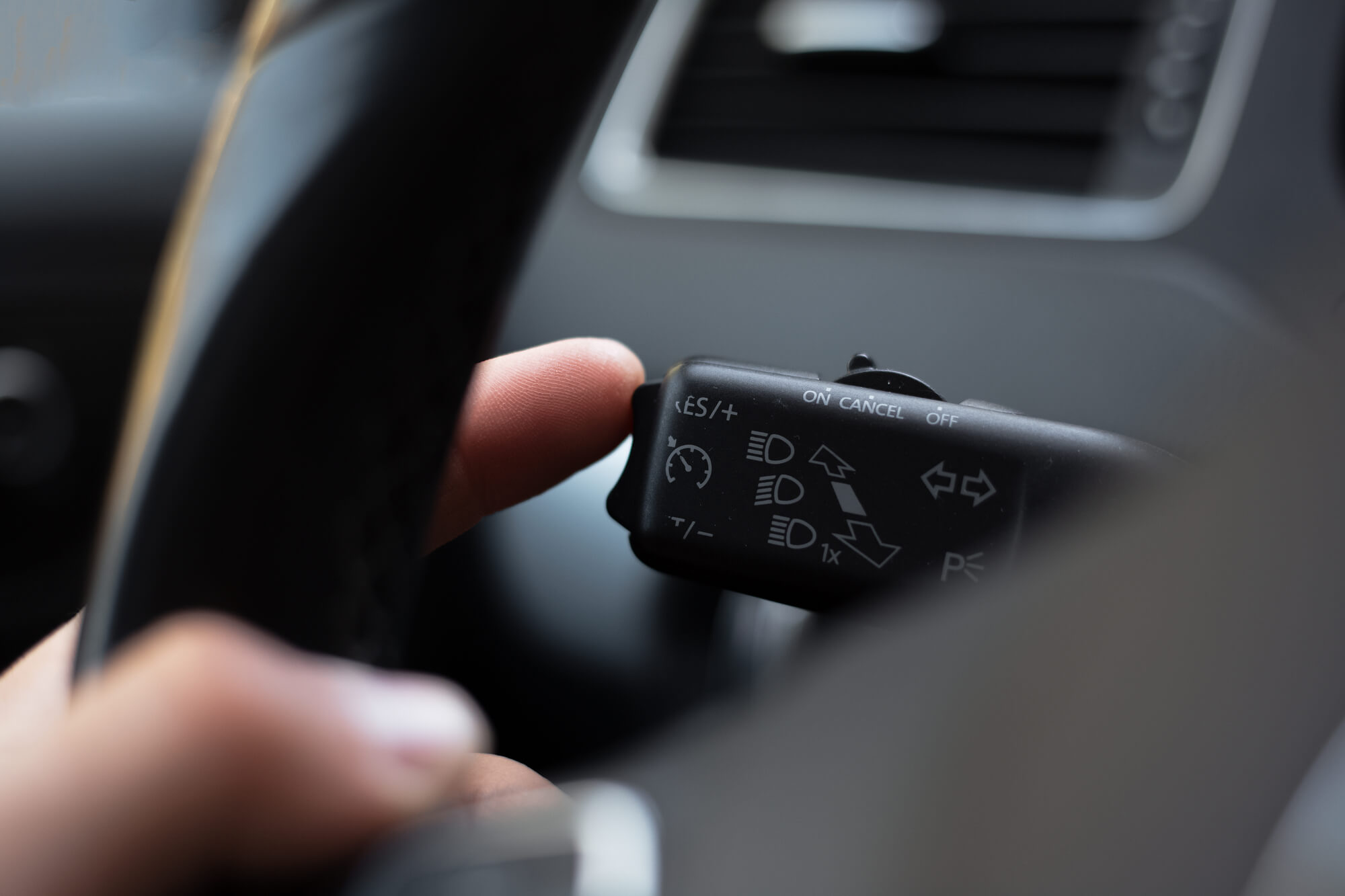
Adaptive cruise control helps maintain a safe distance from other vehicles and improves safety while driving. As most of the 94% of crashes take place due to driver error, its applicability is quite high. It prevents such accidents mainly in congested traffic or construction zones.
ACC reduces stress on long trips by adjusting speed and distance, making stop-and-go traffic easier, and improving gas mileage. While it doesn’t replace driving, it makes the experience smoother.
ACC adjusts speeds to keep traffic flowing in busy areas, which reduces vehicle wear and benefits the environment.
How to Use Adaptive Cruise Control
Adaptive Cruise Control (ACC) makes driving easier for daily commutes and long trips. Want to maximize its benefits? Let’s break it down step by step.
1. Setting and Adjusting Speed
To set the speed, you’ll need to use the ACC button on your steering wheel. You must be traveling above 25 mph for it to fully work. Your speed will be maintained-such as 60 mph on the highway-but if there is a car ahead at 55 mph, the ACC would slow it down to 55 until the road is clear.
2. Maintaining Safe Distance
Next, play it safe with ACC, which uses sensors to maintain a set distance from the car in front. You can adjust this gap using the distance control button, choosing “near,” “medium,” or “far.” “Far” is best for highways, while “near” suits lighter traffic. Remember, ACC may struggle in heavy traffic or poor lighting, so stay alert.
3. Engaging from a Stop
Some ACC systems work from a full stop, like at traffic lights. When activated, just tap the accelerator to move again. Keep in mind that many systems have trouble under 25 mph, so you may need to take control of slow traffic.
4. Navigating Curved Roads
Curves are challenging for ACC. While it’s fine for straight stretches, curves are another matter. Since ACC looks directly ahead, it may not deal with curves as seamlessly as a human driver. Be careful on winding roads and be prepared to take over the steering manually.
5. Handling Hills and Slopes
Hills present their challenges. ACC can’t adjust its view for hills, so it might not anticipate needing to slow down or speed up. As you’re approaching a hill, be aware and prepared to take over when appropriate.
*For detailed instructions, consult your vehicle’s owner’s manual or explore tutorials from your car manufacturer.
Types of Adaptive Cruise Systems

Adaptive cruise control (ACC) is one of the best features available in relatively new vehicles. It helps us navigate the roads with a little more ease. So let’s explore the types of systems out there and how they work.
1. Radar-Based Systems
They use radio waves to spot objects like cars and pedestrians up to 150 meters away, improving safety by stopping vehicles when needed.
The 2018 Ford F-150 features this technology, and Mercedes-Benz introduced the first system, Distronic, in 1999. Other cars, like the Chrysler 200, also use these systems to help with stopping and going in traffic, making rush hour easier.
2. Laser-Based Systems
Laser-based systems do provide a different means of detecting vehicles. They fire out laser beams to measure distance and speed.
Weather conditions such as fog or heavy rain can diffuse the beams and diminish their effectiveness. Some cars incorporate them with additional systems to further improve precision.
3. Optical Vision Systems
Optical vision systems, such as camera-based ones, can detect vehicles from 100 meters away, making them great for checking other lanes.
Subaru’s Legacy uses advanced technology to adjust speed based on the surroundings, including roadwork and traffic jams. Similarly, the 2017 Toyota Corolla automatically slows down to match traffic, ensuring a smoother ride.
These features are part of dynamic ACC systems that maintain a safe distance by adapting to traffic conditions.
Here’s a quick look at some examples:
System Type | Example Vehicles | Key Features |
Radar-Based | 2018 Ford F-150 | Detects up to 150 meters, stops for pedestrians |
Laser-Based | Less common use | Limited by weather conditions |
Optical Vision | Subaru Legacy | Detects neighboring lanes, adjusts for roadwork |
Safety Considerations and Challenges
ACC systems have challenges that are important to know. They can struggle in bad weather like rain, snow, or fog, which affects sensor performance.
Always stay alert, even when using ACC! In stop-and-go traffic, the system may not respond quickly if the car in front suddenly brakes. It’s different from driving with your foot on the pedal.
Safety Tips for Effective Use
Using ACC safely requires a few simple tips.
Here’s a quick list for the road:
- Keep your hands on the steering wheel
- Set a safe distance
- Stay alert and ready
- Understand your system’s limits
Managing Slow Traffic and Merging
When using ACC in slow traffic and merging, be cautious. It can handle highway driving, but you need to be patient.
Sometimes, it’s better to take control, especially with zig-zagging cars nearby. ACC may not notice fast-moving vehicles in adjacent lanes, so always check your mirrors and be ready to react.
Think of ACC as your helper. Stay alert and don’t rely on it completely.
Less Stress and a Smoother Drive
Adaptive cruise control isn’t just fancy tech for your vehicle. It protects you by slowing down and putting distance between you and other cars. You get a smoother drive, and you put less stress on your car on long trips.
Adaptive cruise control is ideal for a smooth freeway drive, acting like a co-pilot. However, it’s important to stay attentive—technology can assist, but your focus is what keeps the drive safe.
For more insights into car technology, visit Gearhead Chronicle and explore our detailed guides. With the right knowledge, your next road trip could be your most enjoyable yet!


